It should start with your goal and your real life
A personalized fitness plan should not begin with a random workout split. It should begin with your goal, your current fitness level, your schedule, your equipment, your food habits, your injury history, and the type of support you need to stay consistent.
It needs a clear workout structure
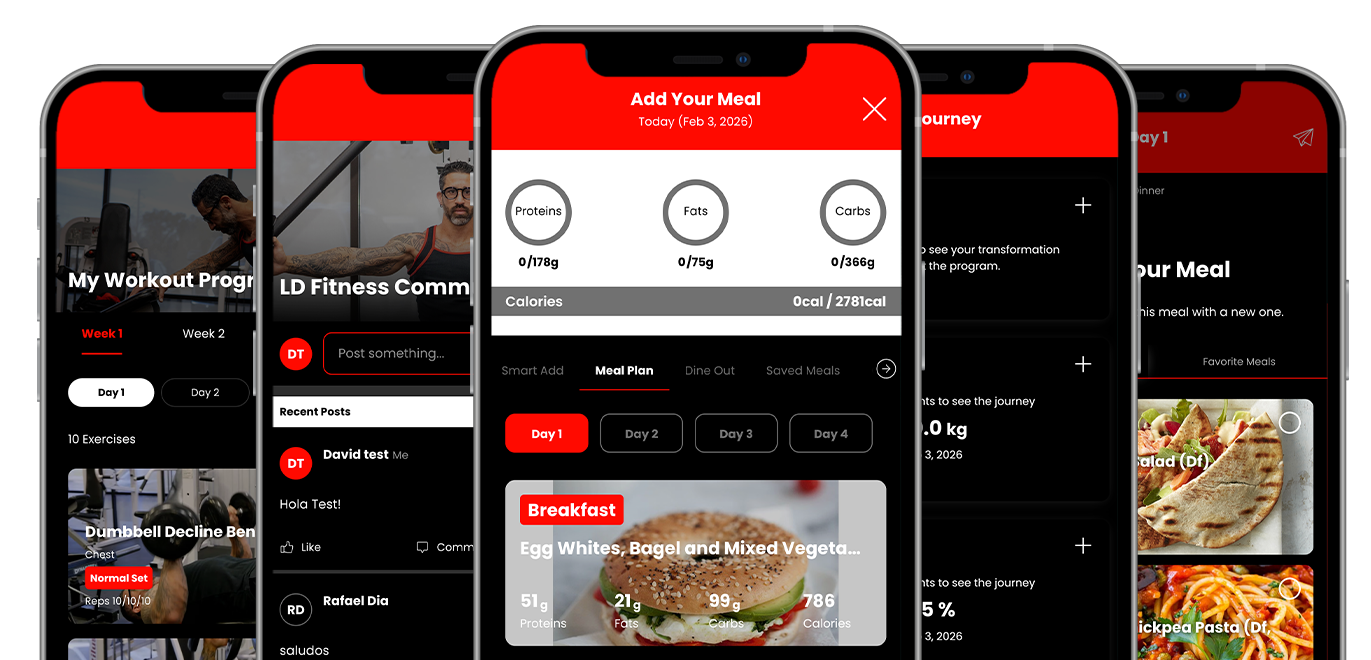
Your workout plan should tell you what to train, when to train, how many sets and reps to do, how hard to push, and how to progress. It should also include home or gym options when needed, plus exercise swaps so one missing machine does not ruin the session.
It should include nutrition guidance
Workouts alone are rarely enough. A complete plan should include meal structure, grocery guidance, food diary support, eating-out options, and realistic nutrition habits. This is especially important for weight loss, energy, strength, and long-term consistency.
It should track habits, not just workouts
Habits are the bridge between intention and results. Sleep, steps, water, protein, planned meals, completed workouts, and food diary consistency all matter. Habit tracking helps members see the daily actions that support progress.
It should measure progress in more than one way
The scale can be useful, but it is not the only signal. Measurements, photos, strength, energy, workout completion, meal consistency, and confidence all help show whether the plan is working.
It should adjust over time
A personalized plan should not stay frozen. LD Fitness reviews progress and updates plans monthly, so the program can respond to schedule changes, strength gains, fat loss, plateaus, and new goals.